
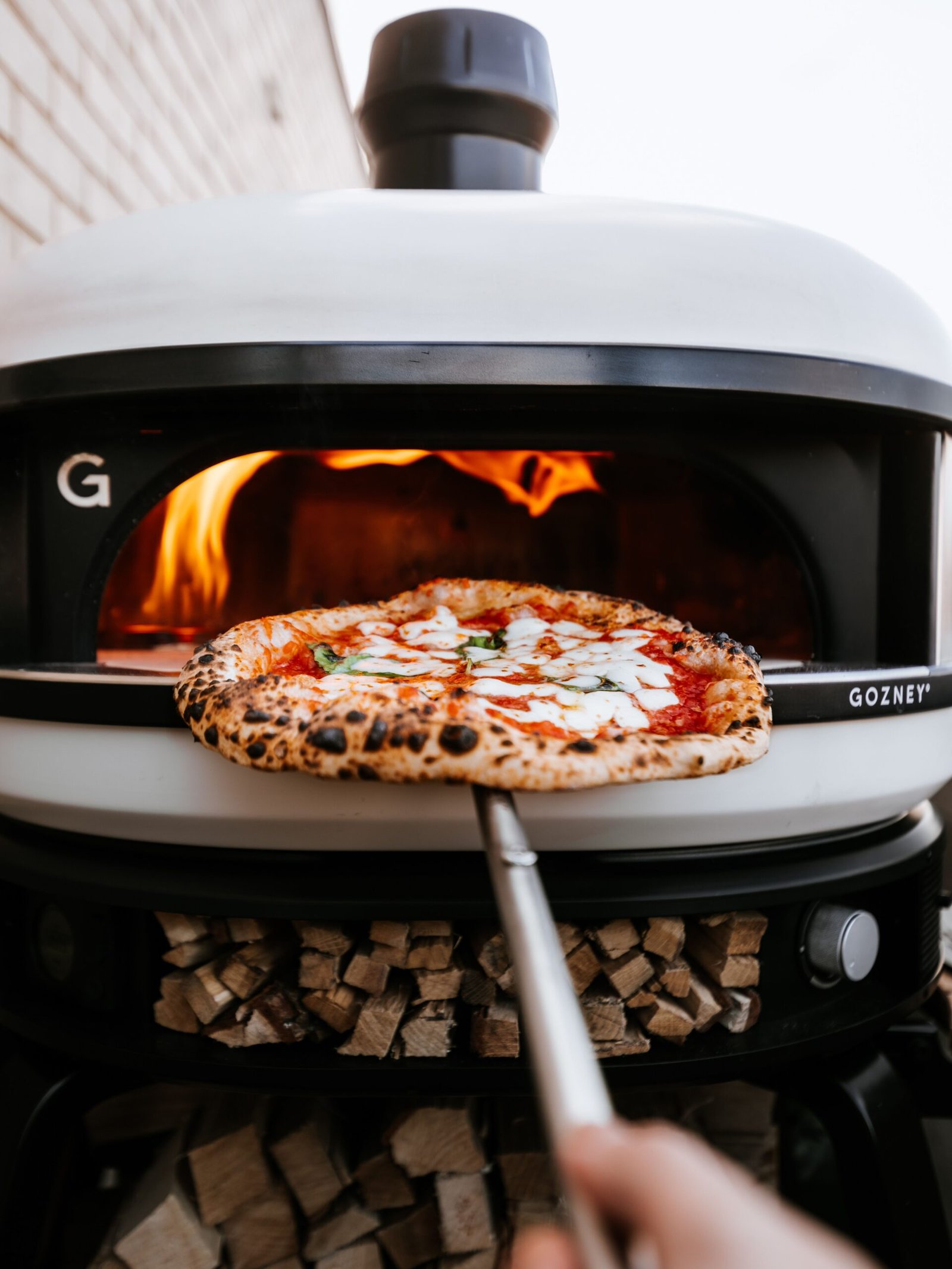
Baking authentic Neapolitan-style pizza with an airy, charred crust (leopard spotting) requires deck temperatures exceeding 850°F to 900°F (450°C to 480°C). Standard indoor kitchen ovens top out around 500°F to 550°F, leaving crusts pale and dense. Investing in a dedicated outdoor pizza oven delivers the radiant roof heat and direct conduction needed to bake a gourmet pie in 60 to 90 seconds.
Choosing between a propane/natural gas unit and a traditional wood or pellet-fired outdoor pizza oven depends on your priorities for temperature control, flavor profile, and convenience.
Gas vs. Wood-Fired Outdoor Pizza Ovens
| Feature | Propane / Natural Gas Pizza Oven | Hardwood / Wood Pellet Pizza Oven |
|---|---|---|
| Preheat Time | 15 to 25 minutes | 25 to 40 minutes |
| Temperature Control | Precision dial adjustment | Requires manual fuel staging and airflow monitoring |
| Baking Heat Peak | 900°F – 950°F (480°C – 510°C) | 950°F+ (500°C+) |
| Wood Smoke Aroma | Clean combustion (No ash or smoke) | Authentic wood-fired smoky aroma |
| Post-Cook Cleanup | Zero ash cleanup | Requires emptying ash pan and sweeping firebox |
| Best For | Fast weeknight dinners & high-volume parties | Traditionalists seeking wood-fired authenticity |
1. Cordierite vs. Biscotto Pizza Stones
The baking stone floor is the thermal battery of any outdoor pizza oven:
- Cordierite Stones: The standard in most portable ovens. Cordierite withstands rapid thermal shock and retains heat efficiently. However, at temperatures above 850°F, high thermal conductivity can scorch the bottom of high-sugar or malted flour doughs before the top toppings melt.
- Biscotto Clay Stones: Handcrafted volcanic clay stones from Italy conduct heat more slowly. This allows you to bake pizzas at 900°F+ for 60 to 90 seconds without scorching the bottom base.
2. Preheating and Infrared Temperature Monitoring
Never launch a pizza based solely on elapsed time or ambient roof thermometers.
- Infrared Thermometer Check: Use an infrared temperature gun pointed directly at the center of the baking stone.
- Floor Target: Launch only when the center stone reaches at least 800°F to 850°F (425°C to 455°C).
- Flame Management: If using a gas burner, turn the flame down to low immediately after launching the pie. This allows the hot stone to set the bottom crust while preventing top flame scorch on delicate cheeses.
3. High-Heat Dough Hydration and Flour Selection
Baking in a high-heat outdoor pizza oven requires specific dough chemistry:
- Tipo 00 Flour: Use finely ground Italian Tipo 00 flour with high protein quality and zero malt additives. Malted all-purpose flours contain excess sugars that burn black instantly under intense radiant flames.
- Hydration Levels: Aim for 60% to 65% water hydration. Higher hydration doughs (70%+) work well in slow home ovens but become soggy or gummy during rapid 60-second high-heat bakes.
- Zero Sugar or Oil: Avoid adding olive oil or sugar to the dough mix when baking above 800°F, as both accelerate burning.
4. Stone Maintenance and Cleaning Rules
- Self-Cleaning Heat: Never use soap or water on an oven stone; porous ceramic will absorb water and crack under subsequent high heat.
- Pyrolytic Cleaning: Run the oven on high for 20 minutes after cooking to burn off fallen cheese or marinara spills into fine white ash, then brush it clean with a brass bristle brush once cool.
Final Buyer Verdict
A gas-powered outdoor pizza oven provides the best convenience and effortless temperature management, while wood-fired setups offer authentic culinary craftsmanship for outdoor cooking enthusiasts.